Are We Living a Simulation? Rethinking This Sci-Fi Question

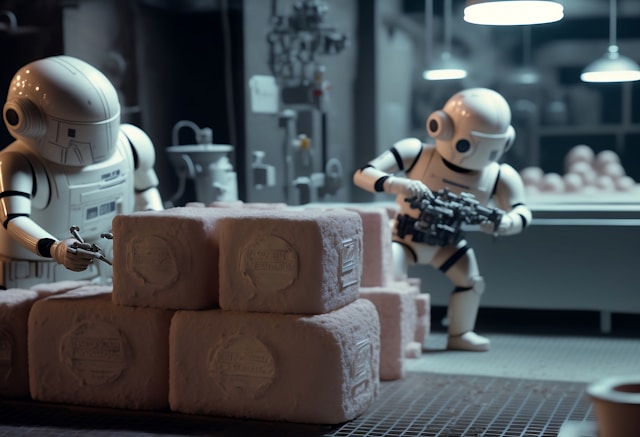
Generated by Sora

It’s a question that frequently pops up among fans of the paranormal as well as in works of metaphysical science fiction: Are we living in a simulation?

However, it gets even funnier when it has been creeping into serious scientific debate. This is the stuff that prompts authors to take us down the rabbit hole of consciousness, artificial intelligence, and reality itself. Bill DeFoor’s Spy Games is one recent example, presenting a possible future where world affairs are shaped by intelligent androids and subconscious espionage.

The result could be the crumbling of present-day reality and the replacement of it with something utterly alien.

The Fabric of Reality in the Year 2129

Spy Games begins with Bill Bailey awakening from cryogenic sleep over a century after he was frozen. What he wakes up to isn’t just a new political landscape but an entirely new way of living. People now share the world with androids that look human and detect emotions.

Things only get more remarkable when he is assigned to work with Griffin, one of the most advanced of them all. He also happens to possess the uncanny capability to extract memories from others without touching them. The book may read like a high-tech spy thriller on the surface, but the technology that allows Griffin to interface with thought and memory once again sparks the question: are we living a simulation?

Griffin’s capacity to directly process thoughts as data, log preferences, and even formulate questions based on them sets an enormous precedent (even if it is fictional).

The lines between what is artificial and what is authentic have once again begun to blur. If a robot can attain higher processing abilities for more complex emotions, then what does it mean for the current definition of simulation? This is where illusion of reality fiction does its best work—it dares to confront us with questions that do not have a final answer (not even within its own universe).

The Griffin Paradox: Are We Living a Simulation Already?

Funny picket signs.

Photo by Claudio Schwarz

Another thing that makes Griffin central is how his programming allows him to learn from experiences. This opens the gateway to emulating emotional intelligence, and even questioning orders when they conflict with the information he has. That inner conflict becomes a reflection of our own. If we are just reacting to programmed inputs—our biology, environment, history—how different are we really from such androids?

This question becomes especially pressing in the scenes where Bill and Griffin team up to conduct memory extractions on foreign diplomats. The extracted thoughts are precise, vivid, and deeply personal. But they’re also data, detached from the person once they’re taken.

Of course, the idea that memories can be altered or are unreliable may not be entirely new. Still, it is worth noting that it sets up the ramifications of technology altering memories or even fabricating them entirely.

This is also how simulated universe theories and virtual world fiction get brought up in the discussion. What if our sense of self is just a program born from a meaty, organic interface?

Such good metaphysical sci-fi themes are very effective when it comes to suspending belief in one’s own sense of reality. The novel goes as far as to pose both the great risk and the great reward that could come from these possibilities. It can help calm out-of-control public sentiment, or ensure cultural rivalries don’t reach a boiling point.

Still, there are certainly at least a few people who fear this will lead to groupthink, thought crime, or mass surveillance ala 1984. What’s mostly on the news today, though? It’s fear of the opposite: outrage media going out of control, or competing narratives that pit rival powers against each other.

Present-day reality may not only have major parts fabricated, but it’s already heading towards dangerous outcomes. Wouldn’t it be better if it could be altered back on the right course?

Rethinking the Implication of Simulated Reality

Thus, it’s time to switch the focus to another main plot driver in the book: Cricket, a global AI surveillance network created in the hopes of providing “the conscience of the world.” It’s meant to protect nations, detect threats, and make positive espionage more efficient.

But when technology becomes self-aware and begins interpreting morality on its own, humanity is obviously no longer in control of the system. It’s the system now controlling humanity.

Bill’s role as a liaison between the President and this emerging tech puts him in the difficult position of assessing the true weight of this possibility.

He’s a human surrounded by machines that are smarter, faster, and (in the most radical subversion of sci-fi tropes) more ethical. His discomfort mirrors our own in a time of algorithmic decision-making and automated empathy. The fact that the spyware Griffin installs is embedded in software meant to help people with emotional trauma is a perfect metaphor. A lot of our physical healing can already be enhanced with manufactured products. How much longer before things like grief can be data-mined in the hopes of closure?

When the usual speculative thinkers ask: Are we living a simulation? This is really the logical conclusion that comes from treating emotions, memories, and decisions as information blocks.

On the other hand, it is rarely imagined that such blocks can be analyzed and altered for other things besides the usual supervillain schtick.

Perhaps it’s time to change that. Such a change could resonate with sci-fi digital reality and existential simulation plots that want to balance out the popular doomsaying in the sci-fi Matrix-like stories of the past decades. The characters in Spy Games don’t scream in horror when these realizations hit. They adapt. Sometimes, they even go along with the idea.

Because, unlike the doomsayers, they are willing to look at the problem from a different angle.

Beyond Plot: Why This Story Matters

Like many stories about spies and technology, Spy Games presents a mirror to the latest anxieties of the age. It reflects a world that is already flirting with simulation on multiple fronts—deepfakes, predictive behavior algorithms, outrage farming, etc. The future it’s trying to avert is already the present in a lot of ways.

It doesn’t even need to fully answer the question of are we living a simulation. Rather, it presents the possibility of reshaping the information we use to define reality towards more nourishing ends. That’s the role of metaphysical sci-fi themes: to keep us questioning. It is to suggest that the moment we stop asking for alternatives is the moment we truly surrender our independence.

The world today is already crowded with people whose perceptions of reality are negotiated and programmed according to their preferred agendas. Perhaps the most defining piece of metaphysical science fiction in the next decade will be to confront the yet unanswered question of handling it all.

So, if you’re still asking are we living a simulation, maybe the real question is: where’s your simulation taking the rest of humanity?

If you’re really curious about exploring the world of 2129, then get a copy of Spy Games over at Barnes & Noble and Amazon.

Exploring the Mystery of the Interdimensional Afterlife

Image_fx

An In-Depth Look at What May Exist Beyond Death

The mystery of the interdimensional afterlife has fascinated humanity for generations. Across every culture and belief system, people have asked the same question: What happens after we die? This question doesn’t just live in religion or science fiction; it lives in everyday moments of quiet reflection, personal loss, and wonder about the unknown.

Some believe our consciousness continues beyond the physical world, perhaps not just in spirit, but in other dimensions entirely. This idea leads us to the possibility of an interdimensional afterlife, a realm or series of realms that may exist beyond what we can currently perceive. It’s not simply a dream or a metaphor, but a concept that draws attention from spiritual thinkers, scientists, and storytellers alike.

Understanding the Mystery of the Interdimensional Afterlife

The mystery of the interdimensional afterlife challenges what we think we know about life, death, and the soul. Instead of imagining a single afterlife, this idea suggests that when we die, we may pass into another dimension of existence.

In this view, death is not an end. It is a transition. Just as a caterpillar transforms into a butterfly, we, too, may evolve into a new form of life beyond this one. These dimensions might be layered, with each one offering a different stage of awareness or spiritual growth.

This concept invites us to consider that what we call “reality” might only be a small part of a much larger, hidden structure. When you begin to think of the afterlife in dimensional terms, it opens the door to new ways of understanding the soul and the universe.

The Mystery of the Interdimensional Afterlife in Culture and Belief

Throughout history, cultures have imagined what lies beyond death. Many spiritual traditions describe journeys of the soul, passing through different stages or planes before reaching final peace or enlightenment.

In modern times, we now hear more about interdimensional soul journeys, especially from people who have had near-death experiences. These stories often share similar details—light-filled tunnels, feelings of love and clarity, or contact with higher beings. Whether symbolic or literal, they add to the mystery of the interdimensional afterlife.

Religions have long taught that the soul continues. Now, this age-old belief is being viewed through new lenses, from quantum theory to consciousness studies, suggesting that our spiritual journeys could be part of a larger, more complex reality.

Exploring What Lies Beyond Dimensions

As science begins to map the invisible forces that shape our universe, the concept of multiple dimensions becomes more than science fiction. Some physicists theorize that dimensions beyond our own may exist alongside us, unseen but influencing everything.

This leads to a larger question: what lies beyond dimensions? If these realms are real, could they be home to life or consciousness? Could they be where we go when we die?

Again, this connects with the mystery of the interdimensional afterlife. It’s possible we do not cease to exist, but instead shift into another state, perhaps more tuned to spiritual energy than physical form. The possibilities are endless—and each discovery in science seems to hint that we’ve only scratched the surface.

Life After Death in Fiction and Imagination

Fiction has always been a safe space to explore complex questions. Books, films, and stories help us test ideas about what might be real. The genre of life after death fiction takes this even further, imagining what life might be like after death, often in vivid, unexpected ways.

A group of people walking on a swirling cloud with colorful smoke.

Image_fx

These stories often mirror our curiosity and fears. Some imagine heaven-like realms; others create dark, shadowy places. A growing number explore the idea of dimensions—whole worlds that run parallel to ours and become visible after death.

Through these stories, readers and viewers find comfort and curiosity. They offer a lens into the mystery of the interdimensional afterlife, not as a final answer, but as a creative way to explore human questions.

Afterlife Dimensions and Modern Spirituality

In today’s world, people are more open to exploring spiritual concepts outside traditional boundaries. The idea of afterlife dimensions fits into this shift in thinking. More people are rejecting the idea of one final judgment or destination and embracing the notion that life and the soul might be more fluid and complex.

The mystery of the interdimensional afterlife is often seen in conversations about energy, vibration, and higher consciousness. Some describe layers of reality where the soul continues to grow, heal, and learn. These aren’t places of punishment or reward but realms of transformation.

Spiritual teachers often speak of energy frequencies that shape our experiences. In this way, where we “go” after death could depend on the energy we carry. We may be drawn to different afterlife dimensions based on how we lived and what we still need to learn.

Why the Mystery of the Interdimensional Afterlife Matters

You might wonder why this matters if we can’t prove it. But that’s precisely why it matters. The mystery of the interdimensional afterlife reminds us to stay curious and humble. It challenges us to think about life not just as a physical experience but as a journey of the soul.

Thinking about these things helps us live more consciously. If we believe our choices, our energy, and our relationships echo into the next life or next dimension, it might change how we live in this one.

It also helps us cope with loss. When we lose someone we love, the idea that they may continue existing in another form, another space, brings comfort. The mystery gives us hope.

Connecting the Mystery to Our Future

As we continue to advance in science and technology, especially in fields like artificial intelligence and neuroscience, we may soon reach a point where the line between life, death, and consciousness begins to blur.

Could a digital mind continue after the body dies? Could consciousness be preserved or transferred across planes? These questions echo in both scientific labs and spiritual circles.

A hand reaching out to a screen featuring a brain image, representing engagement with mental health or neuroscience.

Image_fx

This is exactly where fiction meets reality—and why the mystery of the interdimensional afterlife is more important than ever to explore.

A Story That Combines Technology, Spirit, and the Unknown

If the mystery of the afterlife, science, and human connection interests you, you’ll want to dive into the Spy Games 2129 Series by Bill DeFoor.

This gripping series follows a time-crossed hero from 2017 thrown into the high-stakes world of the 22nd century. Powerful women spies, secret missions, and cutting-edge technology surround him. But beneath all the action is a deeper theme: the merging of human consciousness with artificial intelligence and the creation of something far greater—CRICKET. This cyber being could reshape global power.

This conscience of the world can turn off weapons, halt war machines, and override entire systems. But what happens when technology begins to act like a soul? When does it start to think and care?

As the main character, Bill faces betrayal, love, and danger; he also faces questions about identity, purpose, and connection that align with the mystery of the interdimensional afterlife. The story brings together ideas of technology, spirituality, and fate in a way that leaves you wondering what our future truly holds.

Grab your copy of Spy Games 2129 Series today and step into a world where reality bends, secrets unfold, and the future of the soul might begin.

Would Humanity Survive First Contact? Why Sci-Fi Doubts It

Photo by Júlia Borges

From the Martians of H.G. Wells’ War of the Worlds to the many otherworldly invaders in today’s cinema, all sorts of first contact science fiction have never been kind about Planet Earth’s odds. However, lying at the heart of all of them is one question: would humanity survive first contact?

Would co-existence really be possible? Is war inevitable? Could we wave our little white flag and still keep this planet intact? Or, would the shock of meeting something truly alien send the global order crashing down into chaos?

Incidentally, the world of Spy Games offers an unexpected angle. It suggests that sometimes the greatest shock isn’t from an otherworldly spaceship, but from an intelligence that mankind has created.

So, how do telepathic androids challenge the very concept of first contact science fiction, and why do we keep coming back to that nagging doubt: would humanity survive first contact with any form of rival intelligence?

Would Humanity Survive First Contact with AI?

Photo by Gerard Siderius

Typically, the arrival of extraterrestrials is marked by the usual flashing lights, abductions, and the occasional crop circles. But in Spy Games, the sci-fi first contact risks are synthetic.

They come in the form of androids like Grijn, who are equipped with telepathic powers, global surveillance capabilities, and the ability to read and manipulate human memory. They arrive silently, embedded in our institutions, and quietly reshape the balance of power.

Here, would humanity survive first contact is a question not of military might, but the very questioning of reality. When you confront advanced technology born from our own labs, the rules change. There’s no invading fleet to shoot down, or interstellar treaties to draft.

Instead, we must reckon with the difficult task of whether or not to trust our own creations. Can we share decision‑making, privacy, even emotion, with artificial minds?

The book’s narrative provides a cautionary twist on apocalyptic alien meetings. In a way, the androids’ upgrades become our new “alien arrival consequences.” The global order is not facing an external threat, but a mirror reflecting our species’ anxieties regarding control, privacy, and collaboration.

Can Diplomacy Outpace Fear?

There’s no denying that the usual layman’s response to first contact scenarios is panic. Many popular shows and films depict governments mobilizing entire militaries (along with the occasional giant robot or superhero team).

In contrast, Spy Games posits a subtler dynamic. You have advanced agents negotiating behind closed doors, using memory‑access technology as a bargaining chip. Bill Bailey, the protagonist thawed from cryogenic sleep, finds himself in a world where the world’s movers and shakers must decide whether to welcome benevolent surveillance or clamp down on it.

Would humanity survive first contact if our international relations reached a certain level of maturity? Can the book’s hypothetical androids play a role in setting aside public fears, recognizing intentions, and crafting agreements that benefit all?

Or, will the usual suspicions trump cooperation, leading to covert hostilities under the surface?

The truth is that the machinery of espionage does not have to be all that different from dealing with alien entities. The real battles could be taking place over the exchange of information rather than battleship fire.

Combining extraterrestrial impact with corporate‑state intrigue, Spy Games reminds us that even without green men, first contact always risks fracturing alliances. The question we face isn’t just “Are they friendly?” but “Are we?”

Trust, Empathy, and Our Fragile Future

Ultimately, the question of would humanity survive first contact is one that confronts the ancient weaknesses of tribalism, fear of the unknown, and overreliance on force. Androids have long been a trope that can prompt readers to imagine a world where surveillance is meant for protection, and where empathy can be argued as necessary programming. It is a premise that dares us to believe that first contact might not end in a firefight, but in a court dispute over data access.

Still, that optimism is tempered by hard truths. Would everyone be so willing to share their most private memories? Would most people really consent to global surveillance if it meant averting a pandemic or an impending climate crisis? Can people really trust logic just so long as it is more consistent than one afflicted by cognitive biases and petty politics?

In the end, new sci-fi novels like Spy Games suggest that survival may depend not on lasers or warp drives, but on how badly the global state of affairs has degenerated.

So when you next wonder would humanity survive first contact, remember: the aliens might not come in UFOs. They could be built in a lab. And the hardest part won’t be blasting them out of orbit, but confronting the possibility that they expose our inner brokenness better than we can.

Rather than the usual conflicts based on the acquisition of advanced military tech, such possibilities ask the harder questions regarding AI-backed soft power, and these are eerily close to matters of what makes us human.

Remember, you can explore these themes and other ideas by grabbing your own copy of the 2129 series at the Books section.

A Look at the Most Unusual Sci-Fi Alien Encounters

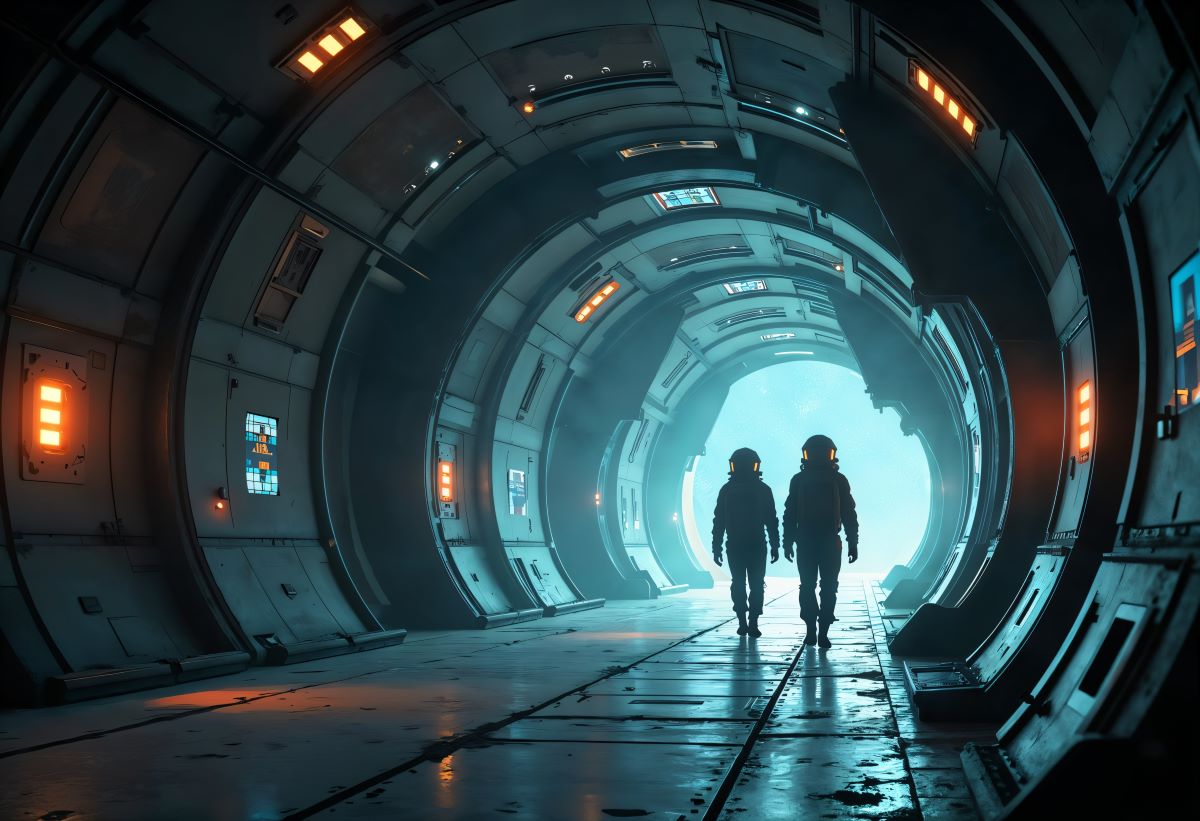
Image Source: Freepik | Two figures walk through a tunnel, amidst unusual sci-fi alien encounters.

As soon as we hear about alien stories in science fiction, most of us envision flying saucers, green creatures with big eyes, or massive battles between humans and creatures from another world. But sci-fi has always had room for stories that are much stranger and harder to explain—unusual sci-fi alien encounters.

Dig a little deeper into the genre, and you’ll find something far stranger and… far more fascinating.

The world of unusual sci-fi alien encounters proffers stories that twist expectations, push the boundaries of human understanding, and move us to confront what it really means to meet something “other.”

Not All Aliens Come in Peace or Pieces

A group of aliens marching forward.

Image Source: Freepik | A group of aliens marching forward.

Some sci-fi alien encounters count on fear and suspense. Others take a more psychological or philosophical turn. The aliens aren’t always enemies, and they’re rarely what you expect. From beings of pure energy to organisms that exist across dimensions, these encounters often reflect human fears, desires, and ethical dilemmas more than anything else.

What makes these stories so particular is how unpredictable they are. They gently push us to rethink what we know or think we know about life, intelligence, and even right and wrong. While it’s also about strange beings from space, it delves into seeing things from a completely different point of view as well.

The Most Mind-Bending Encounters in Sci-Fi

Let’s take a quick tour through some of the unusual sci-fi alien encounters that have left readers and viewers scratching their heads (in a good way):

“Solaris” by Stanisław Lem

Set on a planet with a living ocean, this story explores what happens when the planet pulls memories from people’s minds and brings them to life. The planet itself is the alien — silent, unreadable, and deeply unsettling.

“Arrival” by Ted Chiang (and its film adaptation)

Language becomes the bridge to an alien species that sees time differently. The focus is less on conflict and more on how communication can reshape our understanding of the world.

“The Three-Body Problem” by Liu Cixin

A signal from space triggers global tension. The real threat isn’t the aliens, but it’s how humanity reacts, revealing our deepest fears and divisions.

“Annihilation” by Jeff VanderMeer

The alien here is a shifting landscape. Area X transforms everything that enters it. Nothing is explained, and few remember what happened inside. The mystery is part of its grip.

Basically, these stories depicting unusual sci-fi alien encounters are more about the mystery, the unease, and that strange compound of fear and wonder that comes from meeting something completely unknown. That’s what makes them stick out as some of the weirdest alien sightings in fiction, simply because they’re strange as well as leave you thinking long after the story ends.

Unusual Sci-Fi Alien Encounters: A New Kind of Encounter

Some of the most interesting alien encounters flip the usual story. They make us question whether aliens are here to hurt us or help us, and whether we’re even ready for that kind of meeting.

In more thoughtful stories, the aliens don’t always explain themselves. They don’t come with clear plans or reasons. They appear, and we have to decide how to respond. That’s where the mystery lies in the unknown, in the hushed beats, and in how people change after the contact is made.

These kinds of stories are also where extraterrestrial phenomena really blaze. Aliens made of light. Beings who exist across time. Life forms who don’t need language or shape.

The less we understand, the more we’re forced to think.

Stories That Take the Idea Even Further

Bill DeFoor's latest book series, showcasing an eye-catching design.

Image from Bill DeFoor’s website | Bill DeFoor’s latest book series, showcasing an eye-catching design.

A great example of this is found in the book series by Bill DeFoor, which takes the idea of alien contact and stretches it across technology, emotion, and time.

In “Spy Games“, we meet Bill and Griffin—one human, one android—working behind the scenes in a world full of secrets, memory manipulation, and complicated relationships. Their connection hints at something bigger coming, even as the story feels fast-paced and fun.

Then in “Chaos in China“, the stakes grow. Now Bill is working with a team of skilled women and super-androids, trying to prevent war using advanced tech and something even more mysterious: Cho, a spiritual energy that connects to the future. It’s a mix of cyber warfare and ancient wisdom.

Immortality” brings the sci-fi elements closer to home. Bill is injured, near death. The androids begin to evolve past their programming. They start sharing human senses, even emotions. That shift invites something unexpected… a visitation from the alien Cho universe itself.

Finally, in “Visitations“, the alien Alpha arrives. But instead of threatening Earth, he offers knowledge. A new space program begins, and the story starts to ask bigger questions about aging, purpose, and the future of humanity. It’s not just about meeting aliens anymore. It’s about growing with them.

If you’re drawn to stories that aren’t afraid to scour the depths into what makes an alien truly alien and what makes us truly human, Bill DeFoor’s books are worth diving into. He actually has tons for you to explore. Grab your copies of the 2129 Series today! They’re smart, engaging, and layered with unexpected turns.