
Photo by Júlia Borges
From the Martians of H.G. Wells’ War of the Worlds to the many otherworldly invaders in today’s cinema, all sorts of first contact science fiction have never been kind about Planet Earth’s odds. However, lying at the heart of all of them is one question: would humanity survive first contact?
Would co-existence really be possible? Is war inevitable? Could we wave our little white flag and still keep this planet intact? Or, would the shock of meeting something truly alien send the global order crashing down into chaos?
Incidentally, the world of Spy Games offers an unexpected angle. It suggests that sometimes the greatest shock isn’t from an otherworldly spaceship, but from an intelligence that mankind has created.
So, how do telepathic androids challenge the very concept of first contact science fiction, and why do we keep coming back to that nagging doubt: would humanity survive first contact with any form of rival intelligence?
Would Humanity Survive First Contact with AI?
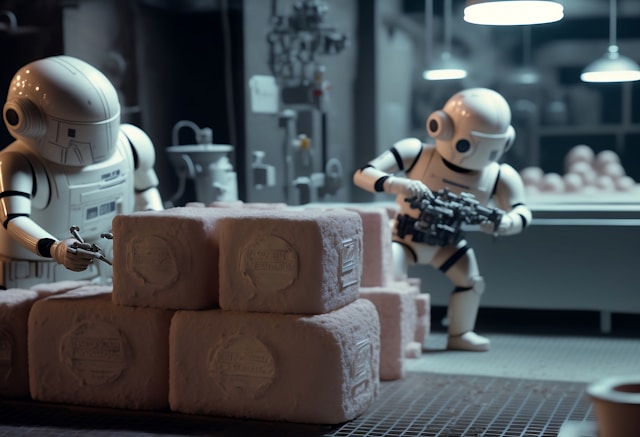
Photo by Gerard Siderius
Typically, the arrival of extraterrestrials is marked by the usual flashing lights, abductions, and the occasional crop circles. But in Spy Games, the sci-fi first contact risks are synthetic.
They come in the form of androids like Grijn, who are equipped with telepathic powers, global surveillance capabilities, and the ability to read and manipulate human memory. They arrive silently, embedded in our institutions, and quietly reshape the balance of power.
Here, would humanity survive first contact is a question not of military might, but the very questioning of reality. When you confront advanced technology born from our own labs, the rules change. There’s no invading fleet to shoot down, or interstellar treaties to draft.
Instead, we must reckon with the difficult task of whether or not to trust our own creations. Can we share decision‑making, privacy, even emotion, with artificial minds?
The book’s narrative provides a cautionary twist on apocalyptic alien meetings. In a way, the androids’ upgrades become our new “alien arrival consequences.” The global order is not facing an external threat, but a mirror reflecting our species’ anxieties regarding control, privacy, and collaboration.
Can Diplomacy Outpace Fear?
There’s no denying that the usual layman’s response to first contact scenarios is panic. Many popular shows and films depict governments mobilizing entire militaries (along with the occasional giant robot or superhero team).
In contrast, Spy Games posits a subtler dynamic. You have advanced agents negotiating behind closed doors, using memory‑access technology as a bargaining chip. Bill Bailey, the protagonist thawed from cryogenic sleep, finds himself in a world where the world’s movers and shakers must decide whether to welcome benevolent surveillance or clamp down on it.
Would humanity survive first contact if our international relations reached a certain level of maturity? Can the book’s hypothetical androids play a role in setting aside public fears, recognizing intentions, and crafting agreements that benefit all?
Or, will the usual suspicions trump cooperation, leading to covert hostilities under the surface?
The truth is that the machinery of espionage does not have to be all that different from dealing with alien entities. The real battles could be taking place over the exchange of information rather than battleship fire.
Combining extraterrestrial impact with corporate‑state intrigue, Spy Games reminds us that even without green men, first contact always risks fracturing alliances. The question we face isn’t just “Are they friendly?” but “Are we?”
Trust, Empathy, and Our Fragile Future
Ultimately, the question of would humanity survive first contact is one that confronts the ancient weaknesses of tribalism, fear of the unknown, and overreliance on force. Androids have long been a trope that can prompt readers to imagine a world where surveillance is meant for protection, and where empathy can be argued as necessary programming. It is a premise that dares us to believe that first contact might not end in a firefight, but in a court dispute over data access.
Still, that optimism is tempered by hard truths. Would everyone be so willing to share their most private memories? Would most people really consent to global surveillance if it meant averting a pandemic or an impending climate crisis? Can people really trust logic just so long as it is more consistent than one afflicted by cognitive biases and petty politics?
In the end, new sci-fi novels like Spy Games suggest that survival may depend not on lasers or warp drives, but on how badly the global state of affairs has degenerated.
So when you next wonder would humanity survive first contact, remember: the aliens might not come in UFOs. They could be built in a lab. And the hardest part won’t be blasting them out of orbit, but confronting the possibility that they expose our inner brokenness better than we can.
Rather than the usual conflicts based on the acquisition of advanced military tech, such possibilities ask the harder questions regarding AI-backed soft power, and these are eerily close to matters of what makes us human.
Remember, you can explore these themes and other ideas by grabbing your own copy of the 2129 series at the Books section.
 BillDeFoor